
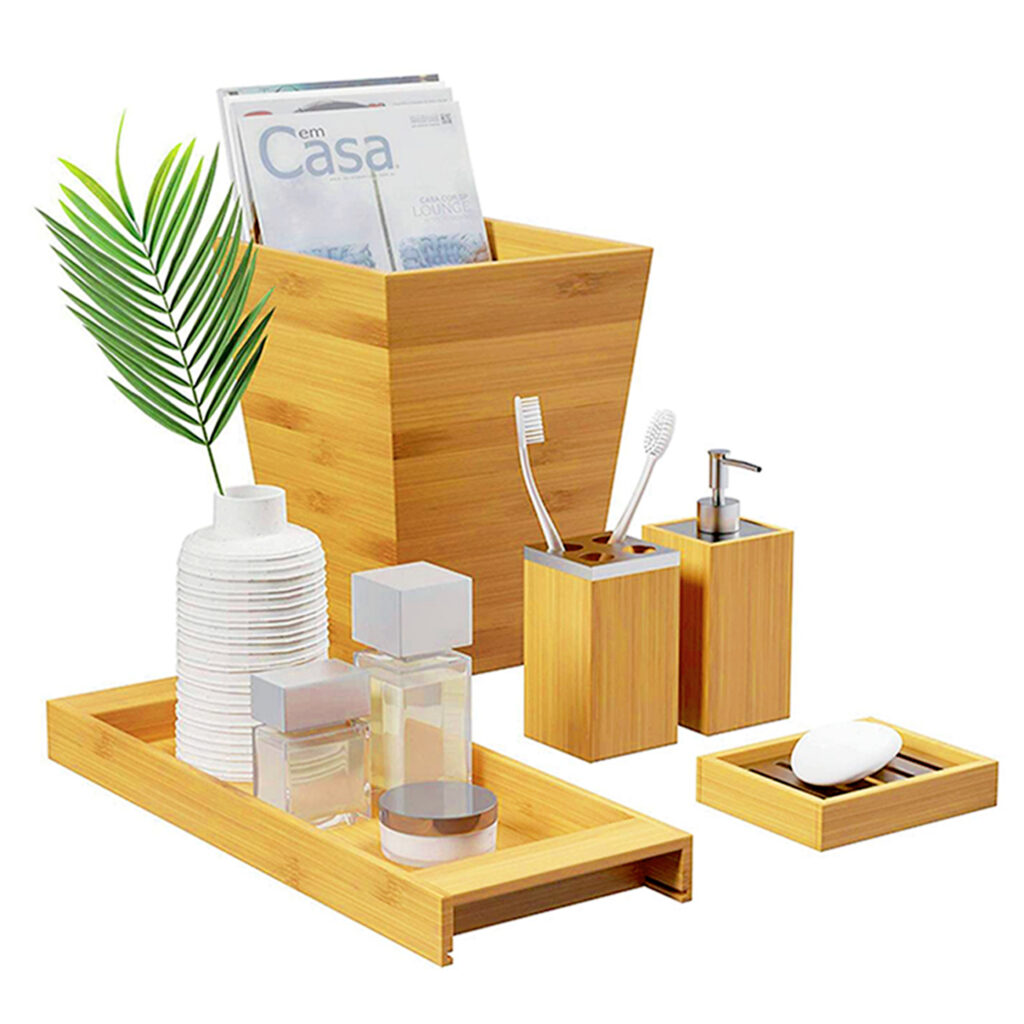
A small bathroom becomes easier to use when storage follows the daily routine. A shelf should put towels within reach without blocking a door. A countertop organizer should group small items while leaving room to wash. A bath caddy should be stored somewhere sensible when the bathtub is empty. The right bamboo accessory can help, provided its dimensions and intended use fit the room.
Below are six practical bathroom storage ideas, followed by a product-selection framework for retailers and brands developing a bamboo bathroom collection.
1. Use one countertop zone for the items used every morning
Start with the objects that must remain beside the sink: soap, a toothbrush container or a few daily products. Group them into a compact zone instead of spreading them across the whole counter. A small tray or coordinated accessory set can make that zone easier to lift and clean beneath.
Measure the clear space around the tap and basin before choosing the item. Check the base rather than only the widest decorative edge, and leave room for hands and cleaning. A tidy arrangement also needs a drying routine: avoid leaving water trapped beneath an accessory, and choose care instructions appropriate to the actual finish.
Our bamboo bathroom set is a starting direction for a coordinated look. For a custom set, decide which components are useful in the target bathroom and specify the internal opening or usable capacity of each container.
2. Use vertical storage where it preserves walking and door clearance
A taller storage piece can free countertop space, but its depth and location matter. Measure the door swing, drawer travel, access to plumbing and the route to the shower. Shelving beside a vanity should allow a towel or bottle to be removed without brushing against a door or tap.
Before selecting a bamboo bathroom cabinet, sketch the footprint on the floor with paper or removable tape. Check the clear space with the doors open. Consider whether the room suits an open shelf, an enclosed cabinet or a smaller item altogether. Agree assembly, stability, fixing and intended shelf loads for the final design.
Wall-mounted storage needs a separate installation plan. Confirm the wall type, fixing method and product instructions; a photograph of a freestanding rack does not establish that it can safely be attached to a wall.
3. Give laundry its own footprint
When laundry accumulates on the floor, a defined collection point can make a bathroom easier to maintain. Compare the hamper’s outside dimensions with the usable bag capacity, lid opening and space needed to remove the contents. In a narrow room, the lift-out action may be more important than a large headline capacity.
A bamboo laundry hamper can also be planned for a bedroom or adjoining utility area when bathroom floor space is limited. Choose the location by available clearance and ventilation, then assess the actual sample. For a retail listing, show the hamper open, the bag removed and the assembly arrangement so shoppers can judge fit.
4. Make a bath caddy serve a specific routine
A bath caddy can keep a book or a few bathing accessories accessible while the tub is in use. It also needs secure contact with the tub and somewhere to dry afterwards. Measure the supported span and tub-edge geometry instead of assuming an adjustable model fits every bathtub.
Choose only the features the intended user needs: a book support, removable holder or small recess may be useful, but a crowded layout can become difficult to clean. Check that the mechanism remains easy to operate and that the caddy cannot be mistaken for a support for standing or sitting.
See the bamboo bath-caddy collection for product directions. A customized version should be reviewed against the target tub range, contact-pad design and stated intended use.
5. Keep floor accessories clear of drainage and circulation
A bath mat, stool or low organizer occupies space exactly where someone needs to move. Compare its footprint with the shower entrance and door travel. Consider the floor surface, drainage path, wetting frequency and how the item will be lifted to clean beneath it.
Do not choose a floor product solely because it matches the countertop accessories. Grip, stability and cleaning requirements are specific to its use. A bamboo stool intended for seated use needs a defined construction and performance review; a decorative stand should be presented according to its own intended function.
6. Repeat a few visual details across the collection
Matching every accessory is unnecessary. Repeating two or three details, such as bamboo tone, rounded edges or hardware color, can create consistency while keeping the room practical. Approve those details together: samples described as “natural bamboo” can still differ in tone, sanding and visible laminate lines.
A useful retail photograph shows both the overall arrangement and the way each piece functions. Include a dimension drawing, a view of the underside where relevant, and storage or assembly details. Avoid styling that hides a handle, blocks a mechanism or places a product in an exposure environment its specification does not cover.
A quick fit checklist before buying or specifying
| Location | Measure or observe | Ask about the product |
|---|---|---|
| Countertop | Clear base area, tap clearance and splash | Footprint, cleaning access and finish care |
| Beside a vanity | Door swing, shelf access and plumbing | Depth, assembly, stability and intended load |
| Laundry zone | Lid clearance and bag-removal space | Usable capacity, bag fit and packing format |
| Bathtub | Supported span and edge geometry | Adjustment, end contact and drying instructions |
| Bathroom floor | Surface, drainage and walking route | Grip, stability, exposure and cleaning method |
How to turn the ideas into a retail assortment
For a first private-label range, build around one countertop solution, one storage item and one product with a clearly different use. This keeps the collection understandable and makes photography, packaging and sample approval manageable. Add a variant when it solves a different space or use problem, rather than changing color alone.
Create a shared appearance reference, then maintain a separate specification for each SKU. Record material, dimensions, hardware, finish, branding and packaging. Separate occasional splash from direct wet use, and agree how claims about grip, stability or load will be substantiated. A general bathroom label does not define those attributes.
Our bamboo bathroom specification checklist explains the technical and sample-approval work in more detail. This article focuses on room layout and assortment selection; both decisions should be settled before a factory commits to the final product specification.
What to include in the first inquiry
Send a sketch or reference image of the intended layout, the SKU list, critical dimensions, expected exposure, quantity per item and destination. Include the preferred material tone, logo artwork and packaging channel. A parcel-delivery item and a retail shelf item may need different pack designs even when the product is identical.
Explore our bathroom accessories program or send your collection brief. Clear dimensions and an intended use for each piece help us review whether the design fits the space and identify the questions needed for an accurate quotation.
Editorial source: Google’s August 25, 2026 home-decor report identified bathroom inspo as a breakout search in the preceding month. We connect that dated design theme with room-layout and product-fit guidance for bamboo accessories.